
Detailed Search
This allows users to easily and quickly find specific seafarers using various search criteria. This can significantly speed up the search process and make it more efficient, especially in large and complex databases.

The Seafarer Manager Module centralizes seafarer records, document compliance tracking, and profile management for maritime crewing teams. Its AI-powered CV import extracts and parses crew data automatically, cutting manual onboarding time. Built-in certificate matrix monitoring sends email alerts before documents expire, keeping every seafarer compliant with rank and vessel-specific requirements.
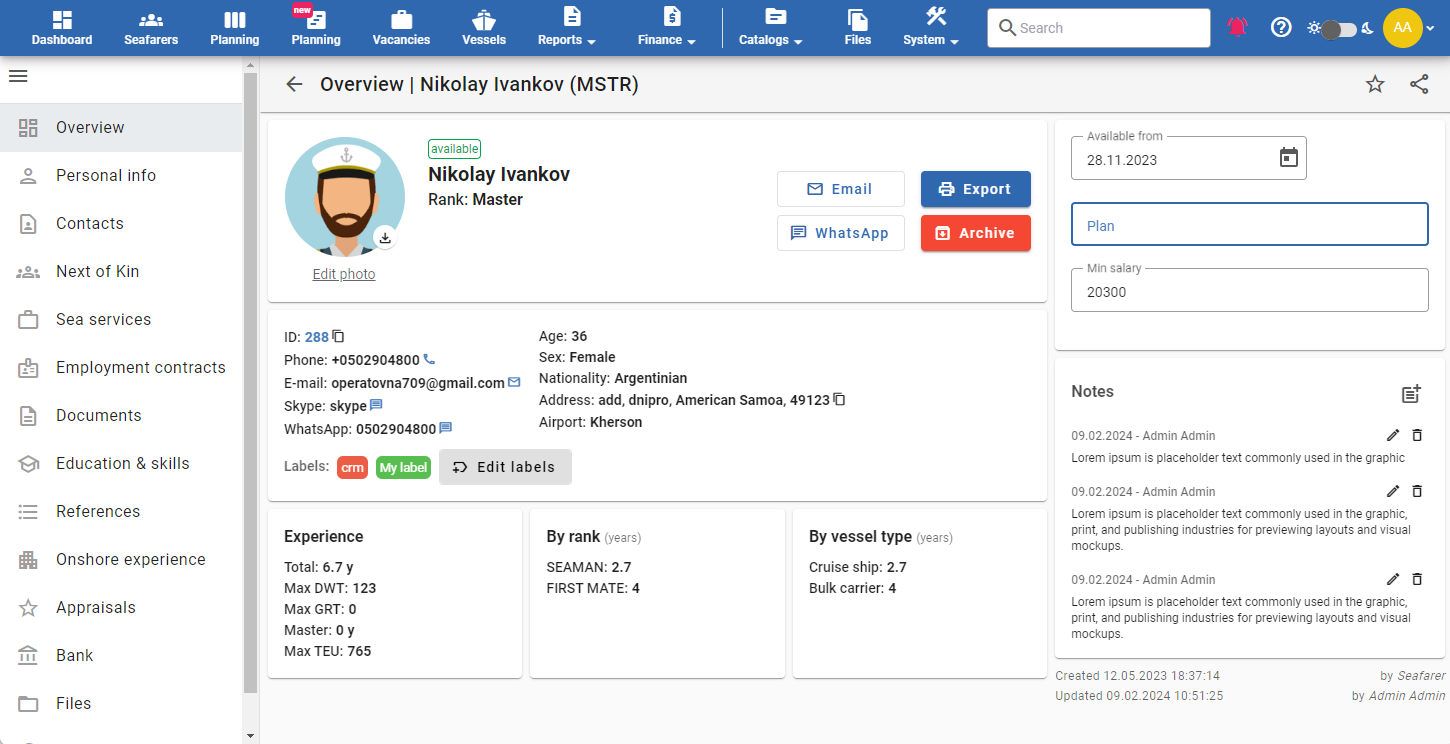
This allows users to easily and quickly find specific seafarers using various search criteria. This can significantly speed up the search process and make it more efficient, especially in large and complex databases.

The ability to quickly preview essential information about a seafarer without needing to open their full profile facilitates navigation and reduces the time spent on finding the required data.
This eases access to specific data and makes the interface more understandable and user-friendly. Structuring information can assist in managing large volumes of data and enhance the overall work with the seafarer's profile.
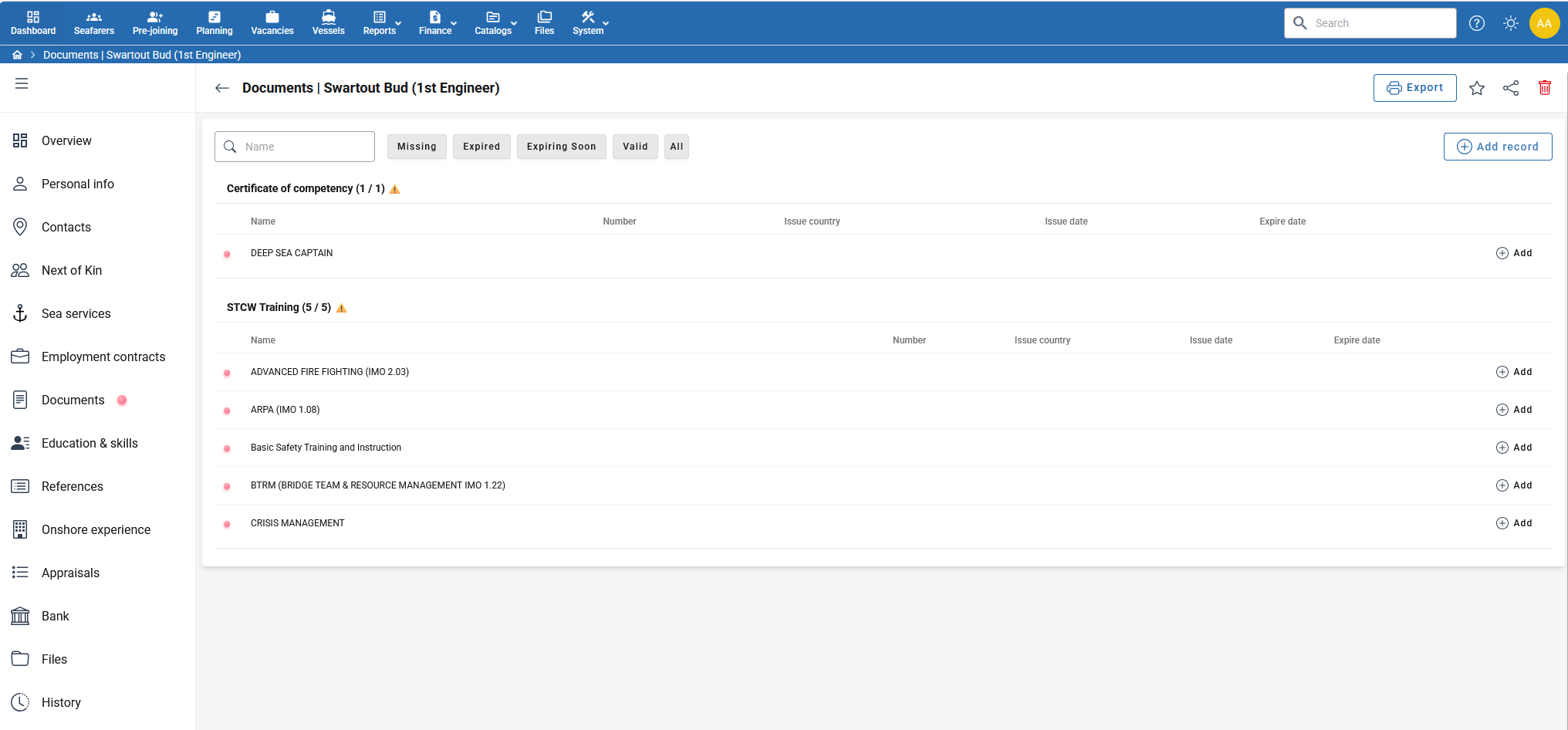
This feature ensures that all crew documents are compliant with regulations and standards. It helps in tracking, managing, and verifying the necessary documentation for each seafarer, reducing the risk of non-compliance and enhancing operational efficiency.
By maintaining a comprehensive document compliance matrix, the system can automatically flag any missing or expired documents, allowing for proactive management and ensuring that all crew members meet the required standards for their roles. Email notifications can be sent to the relevant personnel when documents are about to expire, ensuring timely renewals and minimizing disruptions to operations.
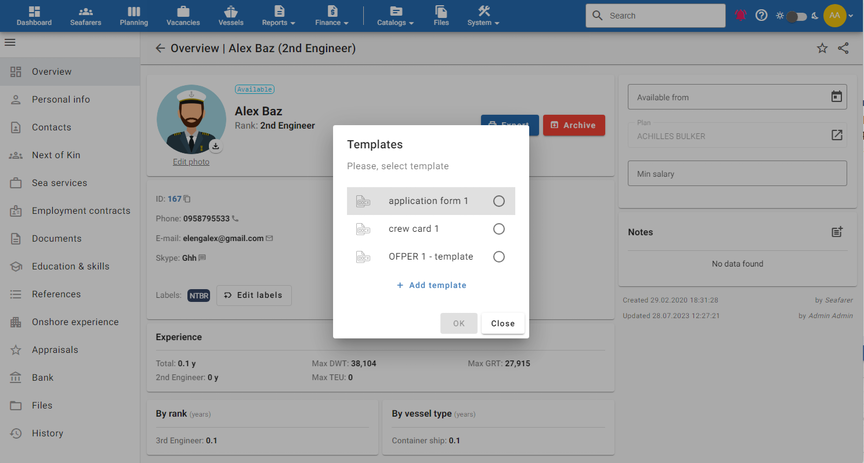
The feature provides the ability to create export templates with various structures, ensuring flexibility in choosing the document format. The user can export information about a seafarer into any required format, fully complying with the requirements of the ship's manager. This simplifies integration with various management systems and ensures adherence to all necessary standards and norms.
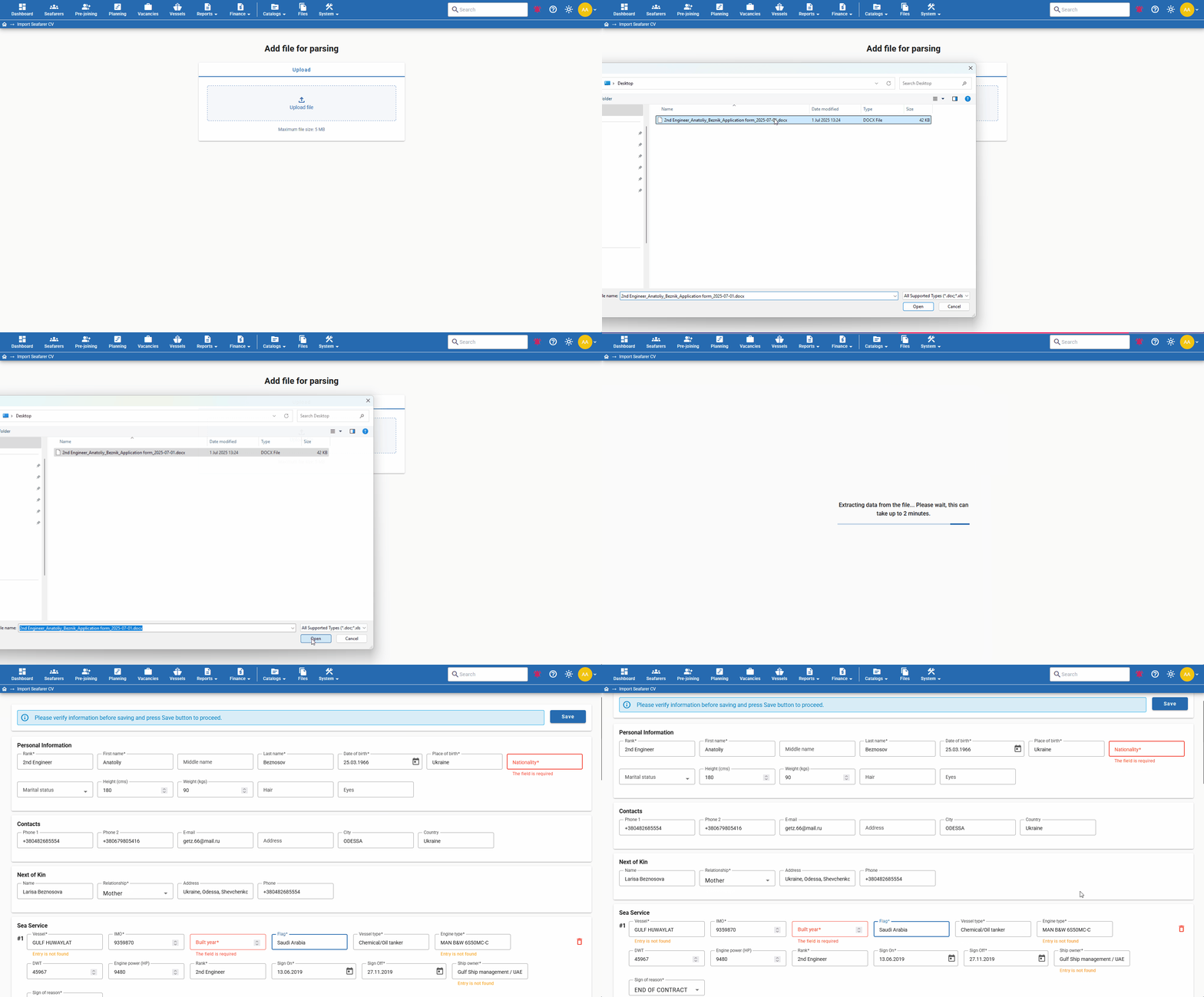
The seafarer profile import feature allows you to automatically extract and parse information from existing CVs and resumes using an AI-powered service. This functionality streamlines the process of creating new sailor profiles by automatically recognizing and extracting relevant data from uploaded documents.
Save time by uploading a completed application form instead of manually entering data. Our system automatically processes the file and extracts all necessary information.
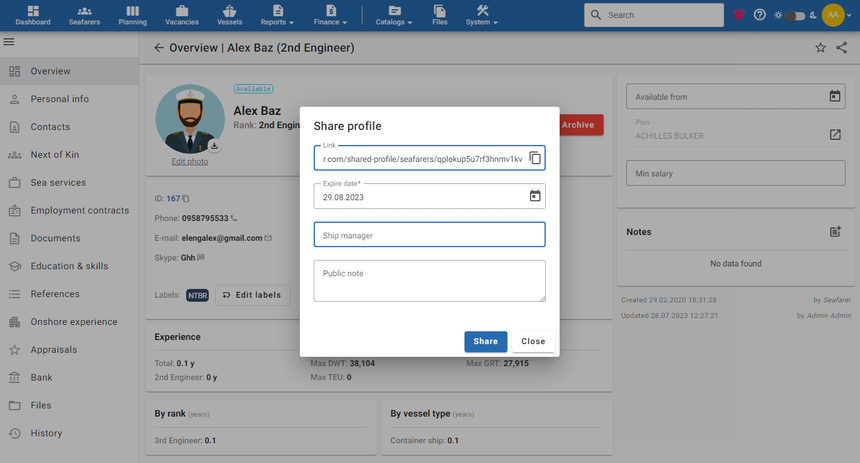
The feature provides the user with the ability to quickly access a seafarer's profile through a direct link, eliminating the need for additional actions. This not only simplifies the process of viewing and sharing information with the ship's manager but also significantly reduces the time spent, making the interaction more efficient and convenient.
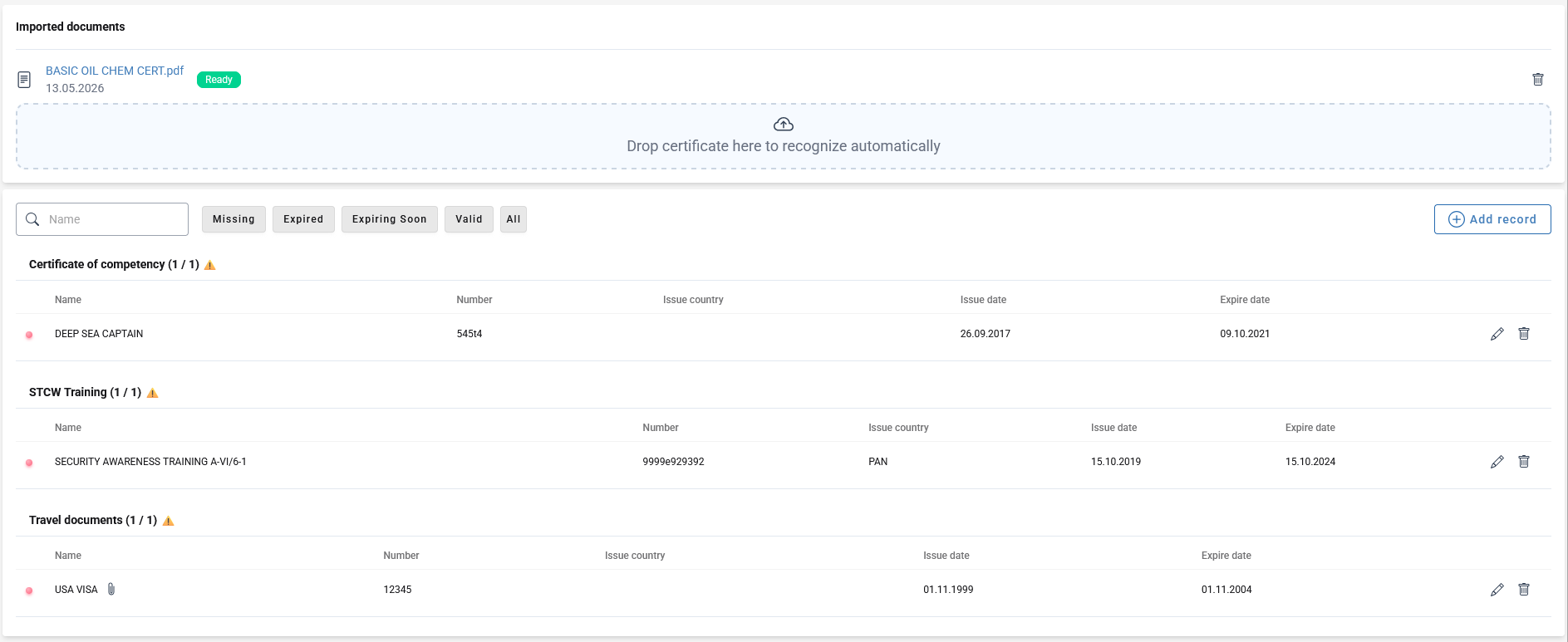
This feature provides a centralized platform for managing all seafarer documentation, ensuring efficient access, structured organization, and compliance with regulatory and company requirements.
Users can upload, store, and manage certificates, licenses, medical records, and other essential documents within a single system. Built-in monitoring of document validity and expiration dates helps ensure records remain current and compliant with industry standards.
The platform also includes AI-powered document recognition and data extraction capabilities. When documents are uploaded, the system automatically identifies document types and extracts key information such as expiration dates and other relevant fields, populating seafarer records with minimal manual input.
By consolidating document management and automating data capture, the solution improves operational efficiency, reduces administrative workload, minimizes compliance risk, and ensures critical documentation is always available for review and verification.
Crewvector is used by maritime crewing agencies to manage seafarer records, automate payroll and invoicing, track crew deployment schedules, and ensure document compliance — all in one platform. Teams replace spreadsheets and disconnected tools with a single system built for the pace of crew operations.
26.06.2026
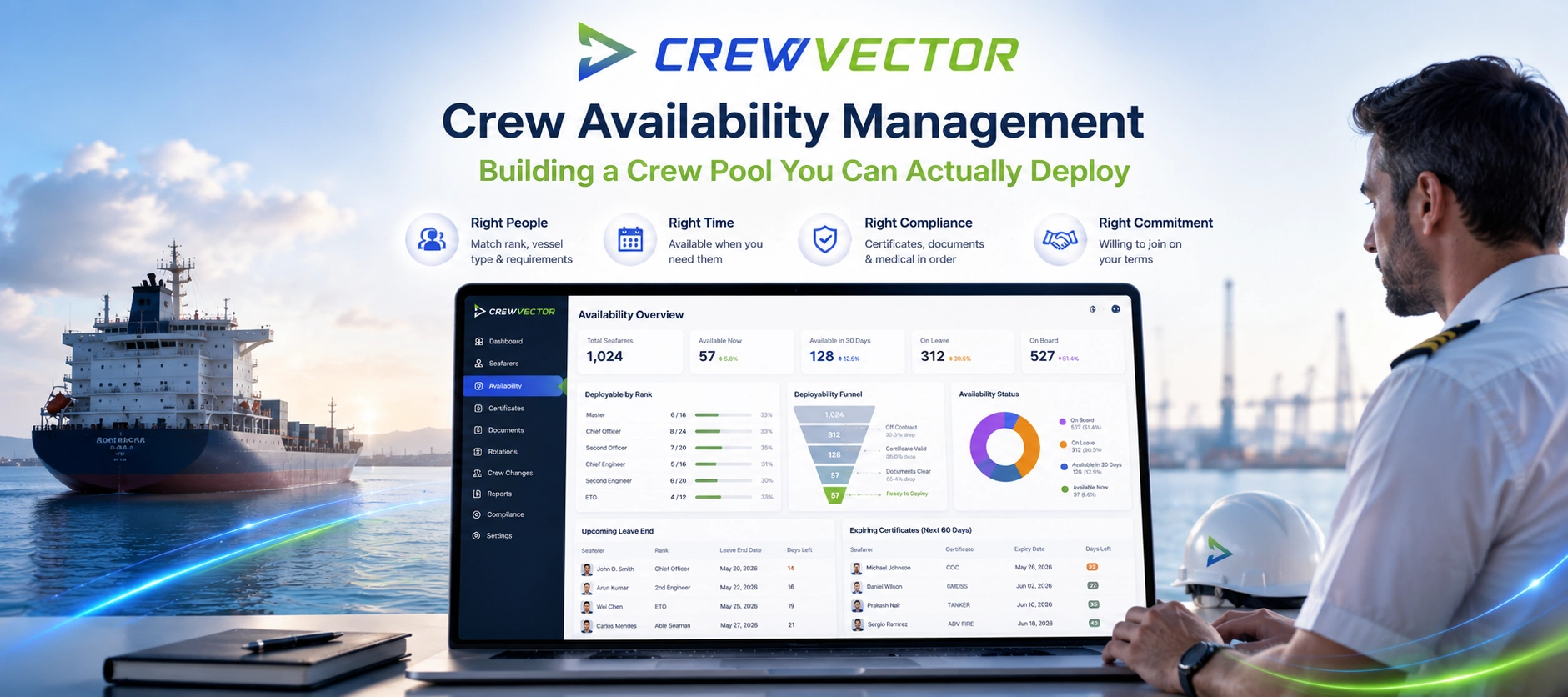
A practitioner guide to crew availability management — the gap between a seafarer being in your database and being genuinely deployable. It breaks down the layers that decide real availability (status and leave, certificate validity, visa/medical readiness, willingness), shows where pools quietly go stale, and explains how to keep one current. Includes a nominal-vs-deployable comparison table, an audit checklist, and a section on why offshore and deep-sea behave differently. Education-first, with Crewvector kept to two light contextual mentions near the end.
24.06.2026
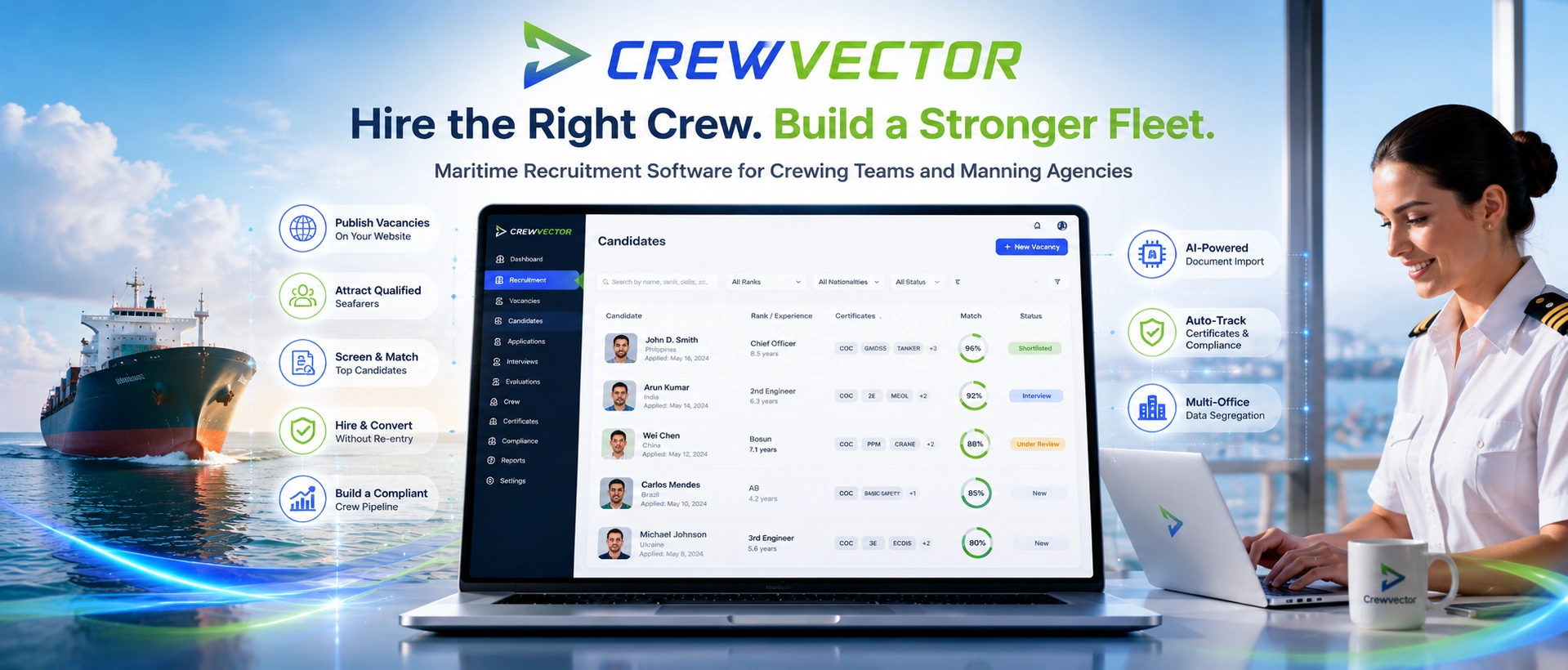
Maritime recruitment software for crewing teams and manning agencies. Publish vacancies, screen seafarer applications, and convert candidates into ready crew in one platform.
22.06.2026
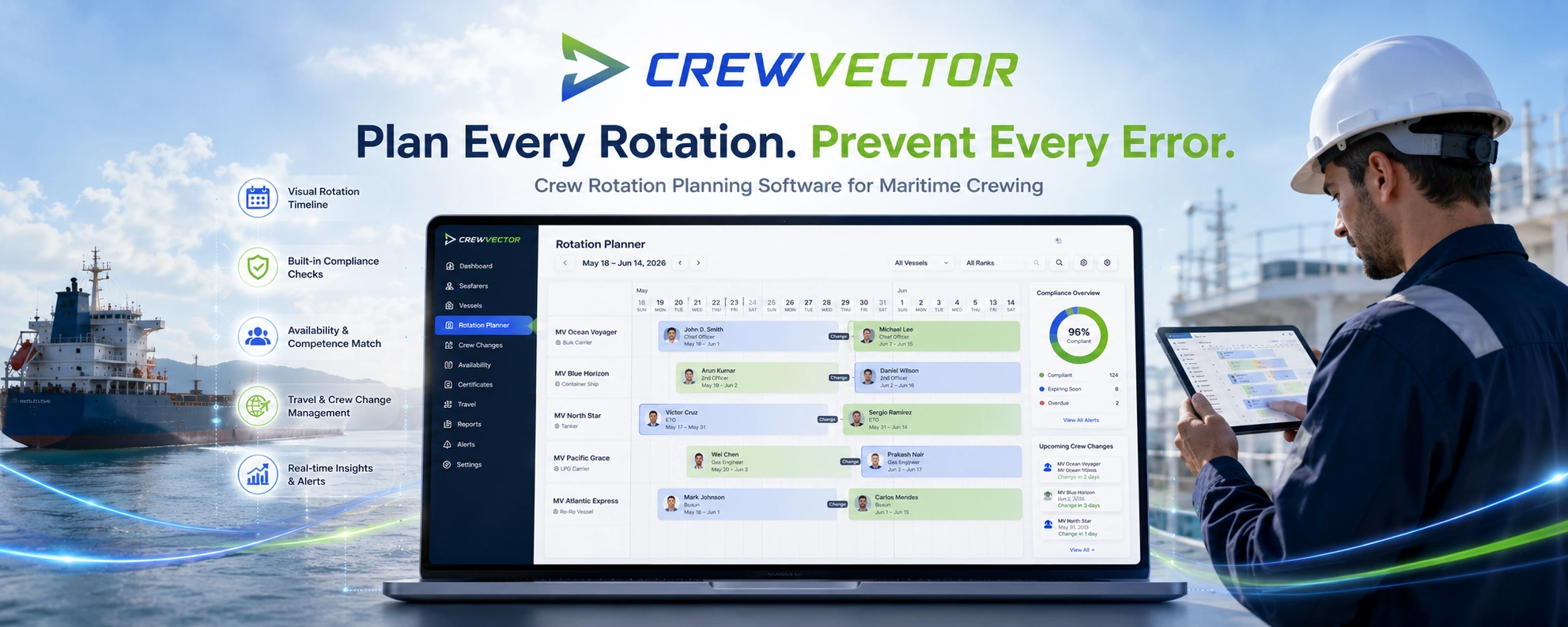
Crew rotation planning software for maritime crewing. Plan rotations, reliefs and crew changes on a visual timeline, with conflict detection and certificate checks built into every assignment.