Seafarers are vital to us all. They travel the world to deliver various cargoes, from bananas, grains, and frozen meat to oil, gas, and construction materials. 80% of global trade is handled by maritime shipping, and seafarers are an important part of it.
The Covid-19 pandemic has significantly complicated the task for crewing agencies in terms of selecting sailors for vessels under foreign flags. Many countries have imposed travel restrictions, and issues arise with obtaining visas for seafarers to return home. Shipowners need to strictly monitor the sailors' contract durations to avoid losing millions of dollars on crew changes.
Crewing agencies have to adapt to old solutions, which don't always account for all the nuances, and adapting to new realities without appropriate software is impossible. Most products do not cover all the modern needs of crewings.
To ensure the automation of ship staffing and planning, several services have to be used simultaneously, which is very expensive. Besides the high cost, most software products have a rigid system without the possibility of adding additional modules tailored to a company's specifics.
Cloud solution for shipping from Crewvector
Shipowners, sailors, crewing agents, as well as crewing agencies and other maritime industry stakeholders are always in search of the ideal software. A rarity among such products is an application that offers maximum functionality and adaptability to user requirements. The developers of Crewvector, drawing on years of experience creating software products for maritime industry companies, took a creative approach to the task and introduced a service that addresses the two main challenges of maritime crewing agencies:
- Collection and organization of information (sailors, shipowners, and other participants);
- Optimization and automation of the workflow in the maritime industry. The innovative feature of the software product from Crewvector is that the system is adaptable with the ability to continuously expand its functionality, make changes, or add necessary modules according to the client's needs. All changes in the program occur quickly and are imperceptible to the client due to cloud hosting and code oversight by the company's developers.
What is Crewvector?
Crewvector is a company that specializes in the automation of commercial and manufacturing enterprises, with a strong focus on customer orientation at the core of all their developments. Stemming from extensive research, their web-based application enables the management and monitoring of ship crews, scheduling, planning entry and loading, as well as providing access to all key data and reports both onboard and ashore.
The functionality of Crewvector's software allows for:
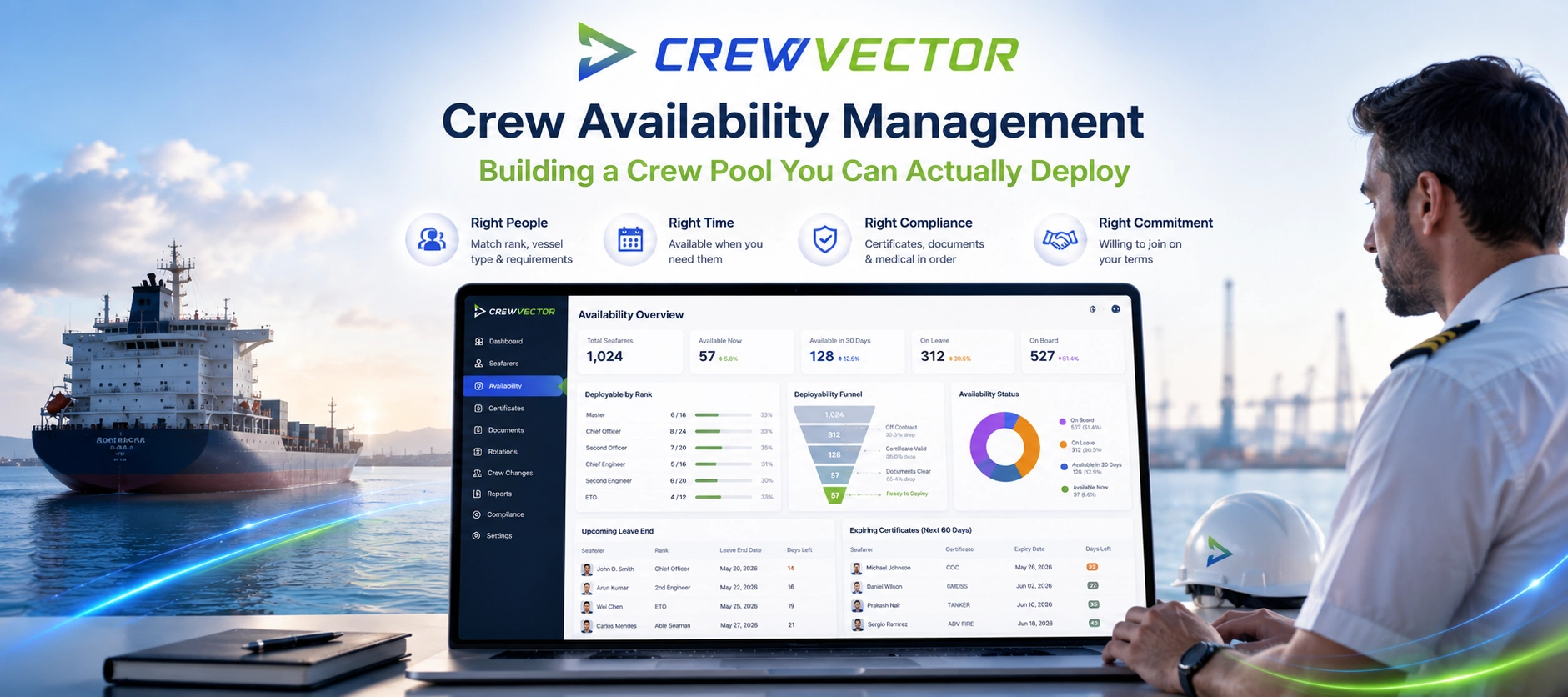
Flexible search for crew members based on required competency, availability, etc.
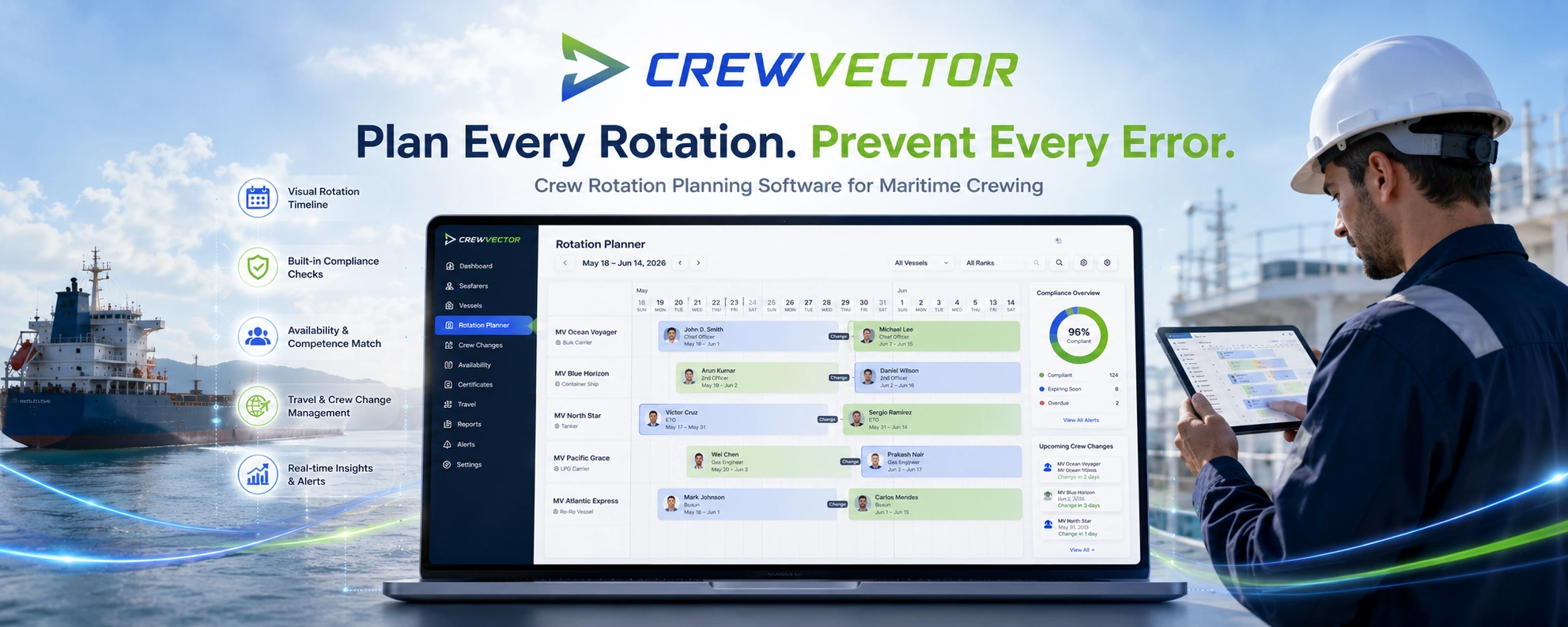
Planning schedules and changes in crew composition.
Storing all information about a sailor, including digital copies of their certifications.
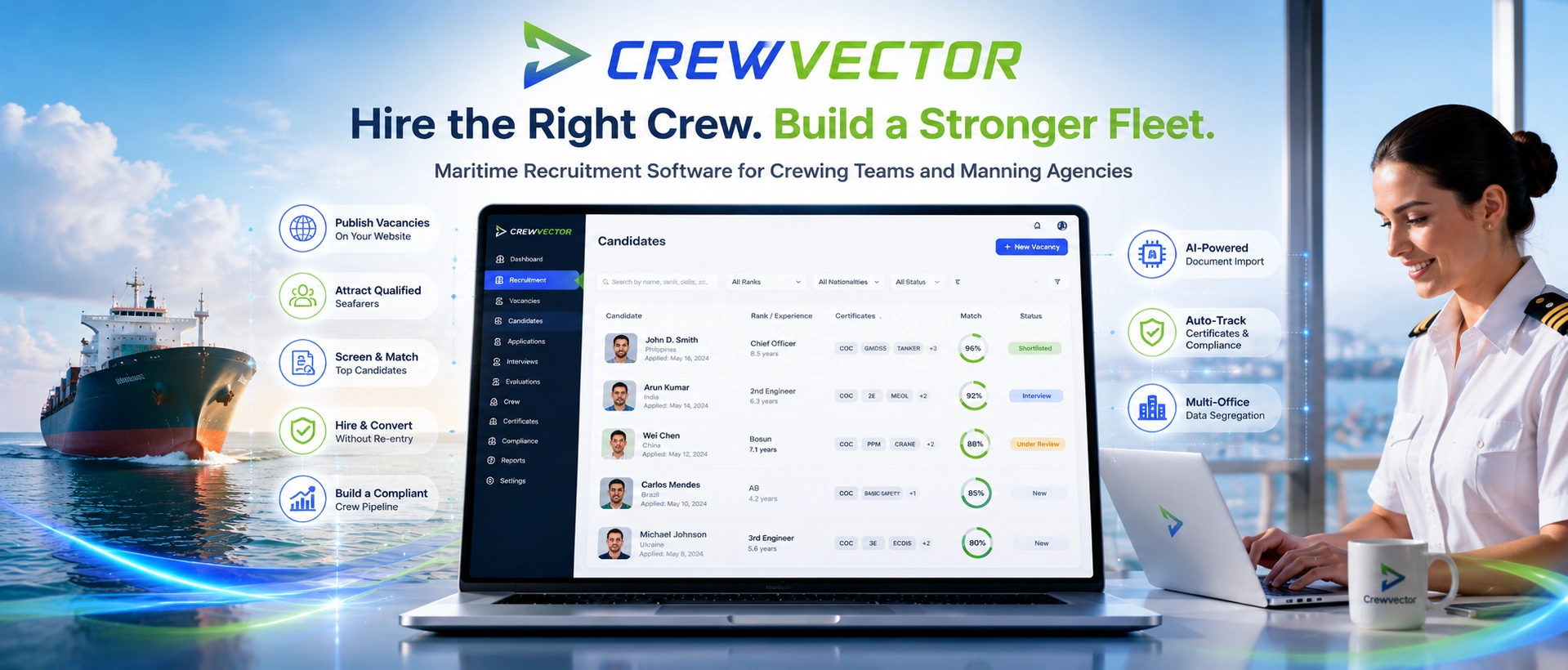
Posting job vacancies.
Creating statistical reports and documents based on data saved in the database.
Ensuring the secure handling of clients' personal data.
Exporting data in any printable format.
The objective set by Crewvector's developers was to design an adaptable software product capable of rapid changes and expanding functionalities to meet clients' needs. For instance, users can add a data export template for any sailor structure and format that meets all shipowner requirements.
The pandemic has inadvertently sped up technology adoption, and many companies have already seized the opportunity to invest in cloud solutions. This has enabled them to automate many operational tasks and facilitate the collaborative work of ship managers and crew.
If you're deciding on a software product for management, Crewvector can help streamline your workflow. You'll gain a clear understanding of how and why everything takes place through analytics and KPIs. Crewvector stores essential data to provide you with quality information.
To learn more and evaluate the benefits of the service and see if it aligns with your objectives, you can request a demo version now.