Key Findings at a Glance
The UNCTAD Review of Maritime Transport 2025 paints a sobering picture for maritime operators: global trade growth is stalling at just 0.5% for 2025—down from 2.2% in 2024. This isn't a temporary dip; it's the new operating reality shaped by persistent geopolitical disruptions and shifting trade patterns.
The Forces Reshaping Maritime Trade
1. Red Sea Disruptions: The Cape of Good Hope Becomes the Norm
What began as a crisis response has calcified into standard operations. Vessel rerouting around Africa has driven ton-miles up by 6%—a historic jump that directly impacts fuel costs, voyage times, and crew scheduling complexity.
The Suez Canal remains 70% below 2023 traffic levels. For context, this isn't just a Red Sea problem; it's a global supply chain restructuring event.
2. Freight Rate Volatility: Expect the Unpredictable
The report confirms what operators already feel daily: freight rate volatility is no longer an exception—it's the baseline. The combination of route uncertainty, port congestion, and policy shifts means traditional forecasting models are struggling to keep pace.
3. US Policy Measures Adding Friction
New US tariffs and port fees on foreign vessels are injecting additional cost uncertainty into an already strained system. For international operators, compliance complexity is rising alongside operational costs.
4. Critical Minerals: The New Geopolitical Flashpoint
Trade in critical minerals is emerging as a new axis of geopolitical tension, with implications for vessel demand, route security, and long-term fleet planning.
What This Means for Maritime Stakeholders
Shipping Operators
- Crew management costs are under pressure. Longer voyages mean more rotations, higher fatigue management requirements, and increased wage bills.
- Operational agility is now a competitive advantage. Fixed schedules and rigid crewing models struggle against 6% ton-mile inflation.
- Documentation and compliance overhead grows. Multiple jurisdictions, shifting regulations, and heightened sanctions screening demand robust systems.
Maritime Investors
- Asset utilization metrics need recalibration. Vessels traveling 6% farther for the same cargo volume changes ROI calculations.
- Route diversification strategies merit fresh evaluation. The Suez Canal's diminished role isn't temporary—it's structural.
Crew Managers
- Crew welfare systems face new stress tests. Extended voyage times impact mental health, retention, and training schedules.
- Agency networks must demonstrate geographic flexibility. Can your crewing partners handle last-minute route changes?
The CrewVector Perspective
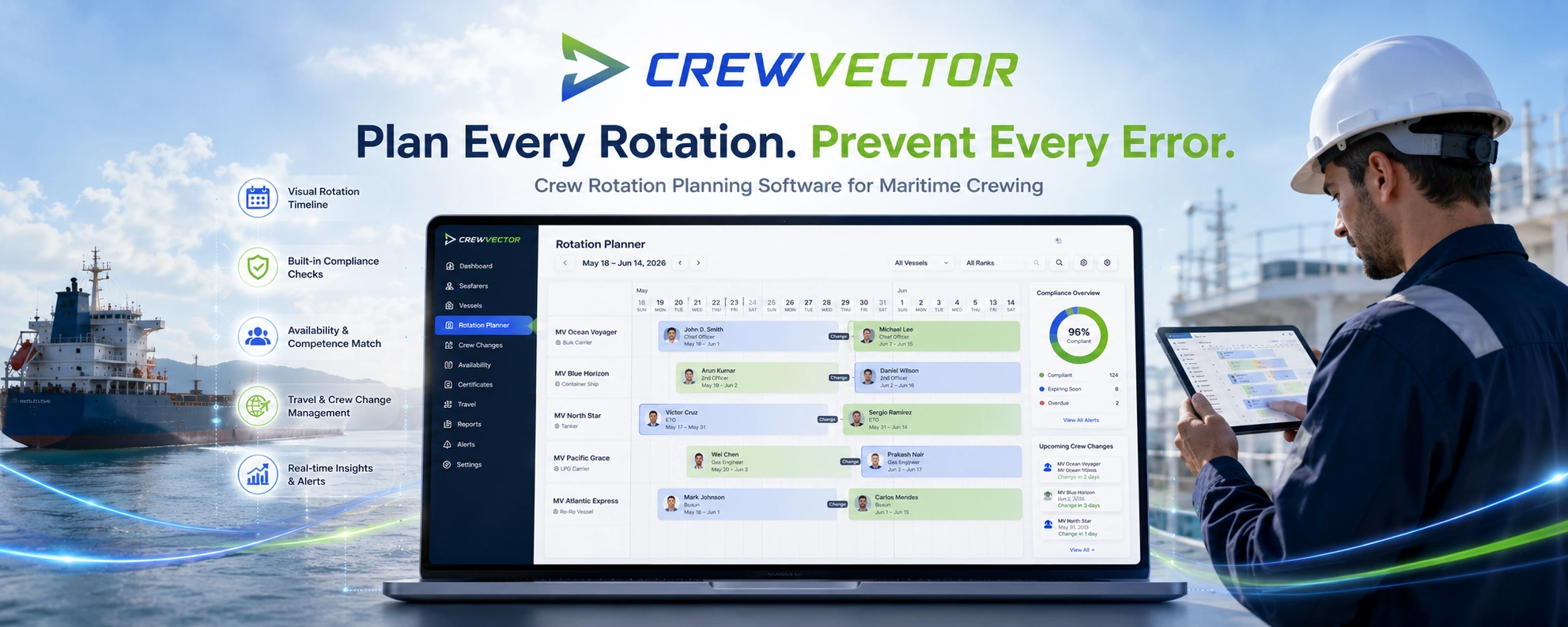
Volatile markets punish rigid operations. When routes change overnight and voyage durations extend by weeks, crew management becomes a real-time optimization problem—not a quarterly planning exercise.
The operators weathering this storm best share common traits:
- Flexible crew pools that can mobilize across regions
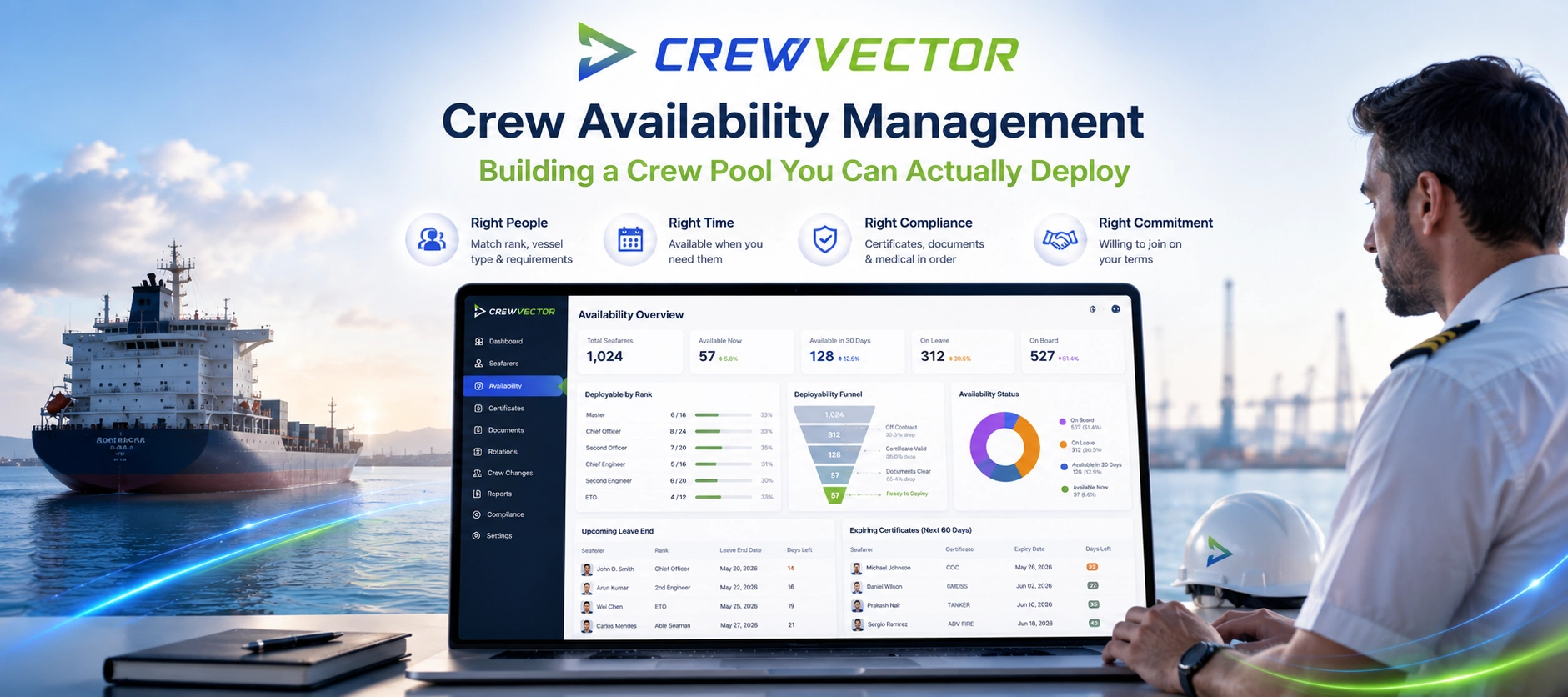
- Real-time visibility into crew certifications and availability
- Integrated compliance workflows that don't slow down urgent deployments
These aren't luxuries anymore. They're operational necessities in a 0.5% growth environment where efficiency gaps determine who survives the consolidation ahead.