Crewing agencies did not choose Excel because it is ideal. They chose it because it was available.
For years, spreadsheets were “good enough” to track seafarers, certificates, contracts, and availability. Today, they are not. The operational complexity of modern crewing has outgrown spreadsheet logic.
This is not a technology discussion. It is a risk and scalability discussion.
The Hidden Cost of Spreadsheet-Based Crewing
Excel appears inexpensive. There are no subscription fees and no implementation process.
The real cost is operational friction:
Duplicate crew profiles across multiple files
Manual consolidation of document status
No real-time visibility across departments
Time spent reconciling different versions
Every additional vessel increases spreadsheet complexity. Every additional coordinator multiplies the risk of inconsistency.
What starts as a simple file becomes a fragile internal infrastructure.
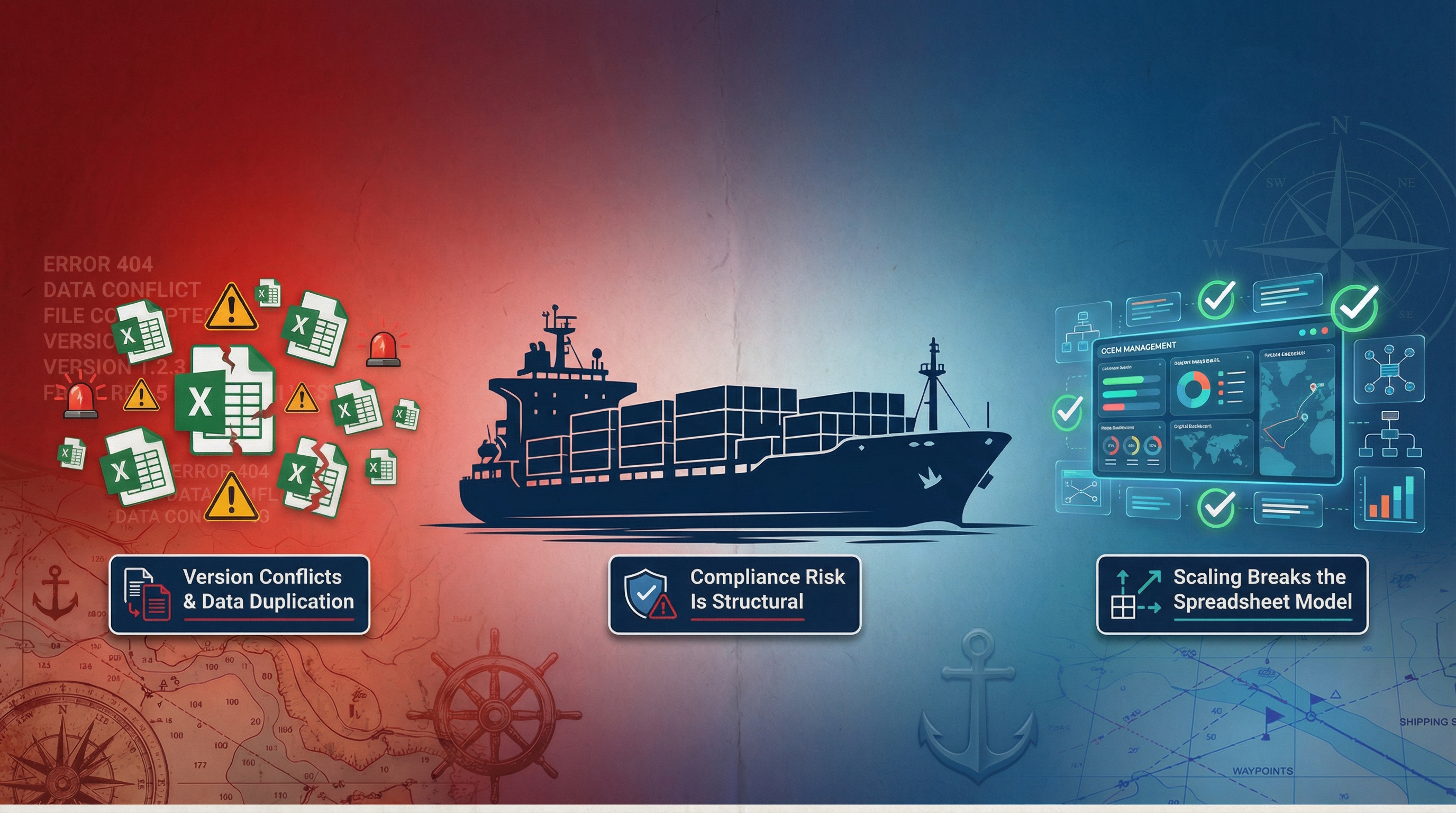
Version Conflicts and Data Duplication
In most agencies, there is no single master file. There are:
Office versions
Personal copies
“Final” versions
Emergency backups
When multiple coordinators update availability, document expiry, or contract dates simultaneously, Excel cannot enforce data integrity.
The result:
There is no structured audit trail. No permission layers. No accountability control.
A centralized crew management system enforces one database, one logic, and controlled access.
Compliance Risk Is Structural, Not Accidental
Crewing is compliance-driven: STCW certificates, flag requirements, medical validity, contract limits.
In Excel:
Expiry tracking depends on manual formulas
Alerts depend on someone checking a column
Historical tracking is difficult to reconstruct
The issue is not human error. The issue is system design.
When document tracking is manual, compliance becomes reactive. Agencies only discover gaps when a crew change is imminent or during an audit.
A structured seafarer document management system moves compliance from reactive to automated:
Real-time expiry monitoring
Configurable alerts
Complete document history
Controlled document storage
Email Is Not a Workflow System
In spreadsheet-based environments, communication lives in inboxes.
CV updates, scanned certificates, contract confirmations, and availability changes are sent via email. Attachments are downloaded and manually updated in files.
There is no connection between communication and structured crew data.
When a coordinator leaves:
Context disappears
Threads are incomplete
Attachments are lost
A crewing CRM centralizes communication around the seafarer profile, not around individual inboxes.
Scaling Breaks the Spreadsheet Model
Excel can function with:
200 seafarers
One office
One or two coordinators
It begins to fail when:
Fleet size increases
Multiple offices are involved
Shipowners require reporting
Compliance requirements expand
At scale, spreadsheets create operational bottlenecks:
Manual reporting preparation
Delayed crew change decisions
Inconsistent performance metrics
Modern crewing requires:
Centralized crew database
Role-based permissions
Automated document expiry logic
Structured candidate intake
Integrated reporting
These are structural requirements, not optional enhancements.
The Illusion of “We’ve Always Managed This Way”
The most common argument for staying in Excel is familiarity.
But familiarity does not equal efficiency.
Spreadsheets hide inefficiencies because the work is distributed:
Coordinators manually double-check
Managers reconcile data before reporting
Compliance officers manually validate documents
The system appears stable because people compensate for its weaknesses.
This model is not scalable. It depends on human vigilance instead of system design.
What Changes with a Structured Crew Management System
A dedicated crewing platform restructures operations:
Single Source of Truth
One centralized database for all crew profiles.
Automated Compliance Monitoring
Expiry alerts triggered automatically based on rules.
Controlled Access and Accountability
Role-based permissions and activity logs.
Integrated Application Intake
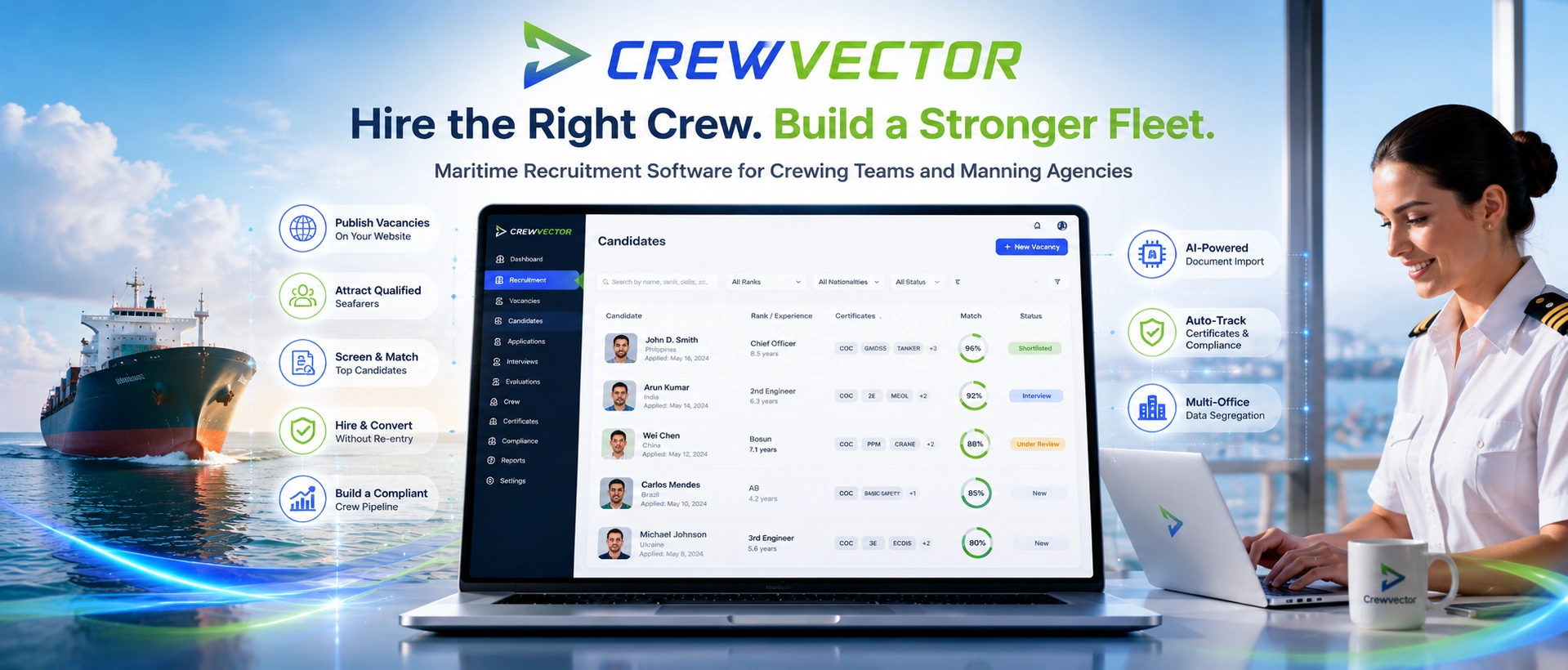
Online forms that create structured candidate profiles directly in the system.
Operational Visibility
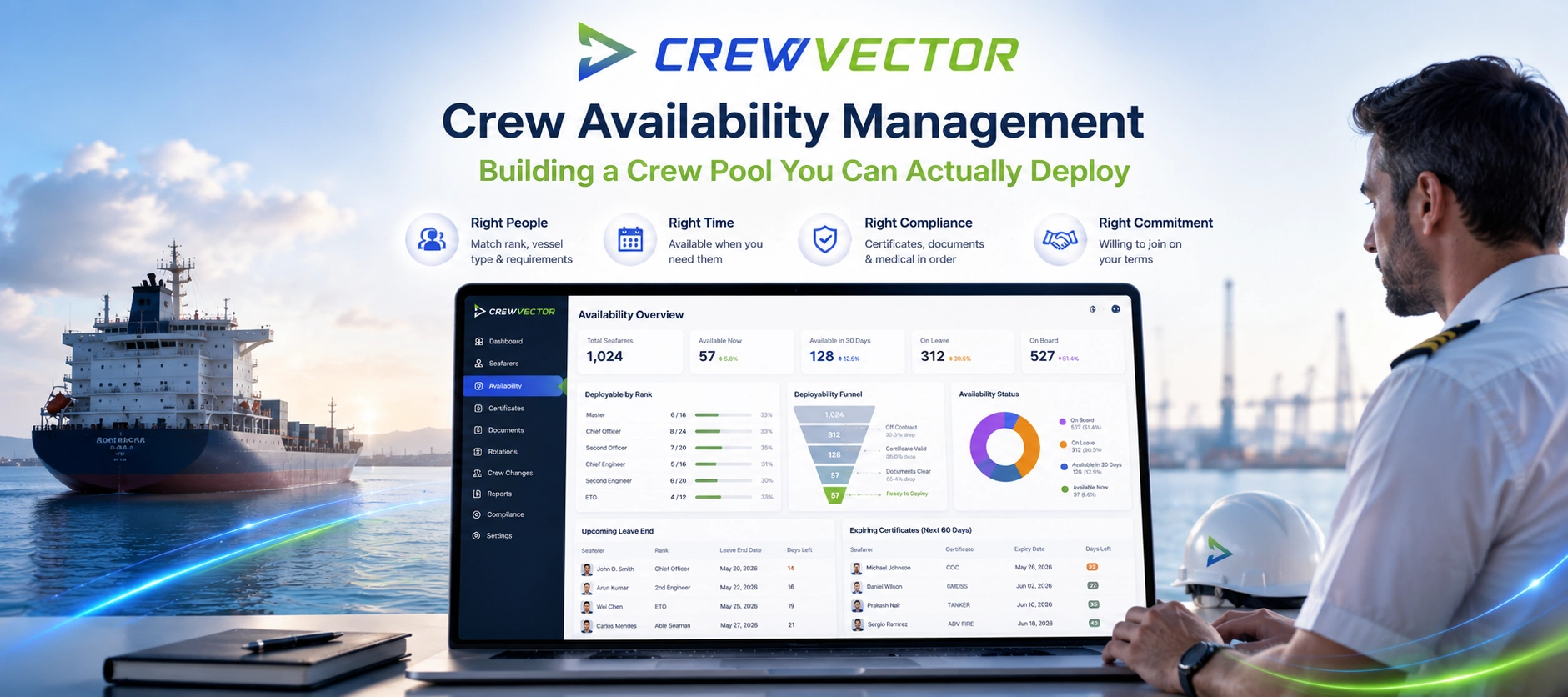
Real-time availability, contract status, and document validity.
This is not about replacing Excel with software.
It is about replacing fragmented processes with structured infrastructure.
Strategic Implication for Crewing Agencies
Agencies that remain spreadsheet-driven face increasing pressure:
Shipowners expect transparency
Compliance standards tighten
Competition becomes system-oriented
Multi-office operations require unified control
Excel is not failing because it is flawed software.
It is failing because crewing operations have evolved.
The question is no longer whether spreadsheets work.
The question is whether they support the level of control, visibility, and scalability modern crewing demands.
Agencies that transition from spreadsheet coordination to system-based operations gain:
In a competitive crewing market, operational structure becomes a differentiator.