
Streamlined Crew Placement
Effectively manage vacancies and candidates with the online Crewvector's Vacancies module. Seamlessly match qualified candidates to vacant positions, ensuring smoother crew placement processes and reduced turnaround times.

The Vacancies Module automatically matches your internal candidate pool against each vacancy's document compliance matrix. It highlights deployment-ready seafarers, flags expiring certificates and visas before submission to the shipowner, and lets administrators publish open positions to attract new applicants — all in one recruitment workflow.
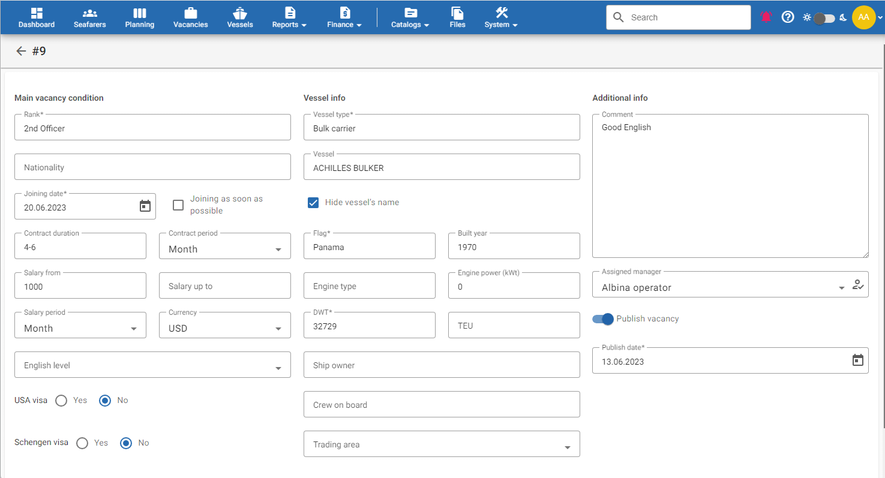
Effectively manage vacancies and candidates with the online Crewvector's Vacancies module. Seamlessly match qualified candidates to vacant positions, ensuring smoother crew placement processes and reduced turnaround times.

Keep track of candidates throughout the recruitment journey. From initial application to placement, the Vacancies module offers comprehensive candidate management, empowering agencies to make informed decisions and foster stronger candidate relationships.

Prevent costly deployment blocks by receiving automatic alerts when a matched candidate's certificates or visas are approaching expiry. Review compliance status before forwarding any profile to the shipowner.
Efficiently create, edit, and archive vacancies within the CRM system. Organize vacancies by role, department, or vessel, and gain quick insights into the status and progress of each opening.
Track candidates from initial contact to placement. Maintain detailed candidate profiles, record interactions, assessments, and feedback, allowing for a comprehensive overview and informed decision-making.
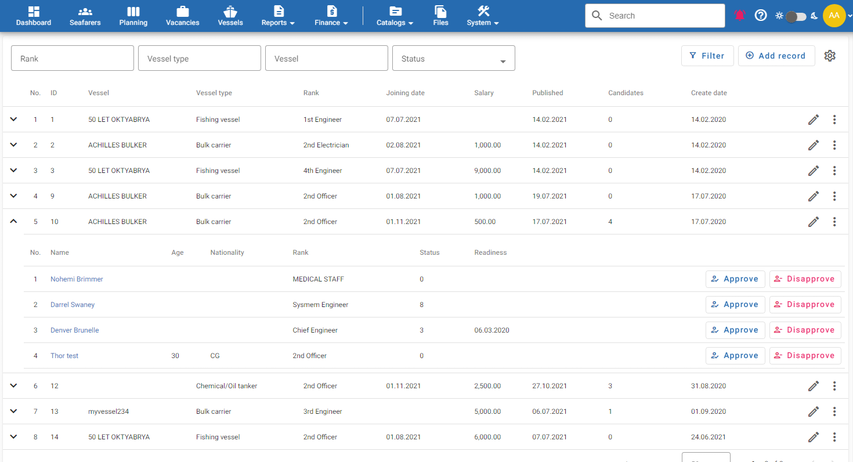
When candidates are matched to a vacancy, the system automatically checks each profile against the vacancy's required certifications, rank qualifications, and contract parameters.
Fully compliant candidates are highlighted, partially compliant ones are flagged with missing or expiring documents, so recruiters can act before submitting to the shipowner.
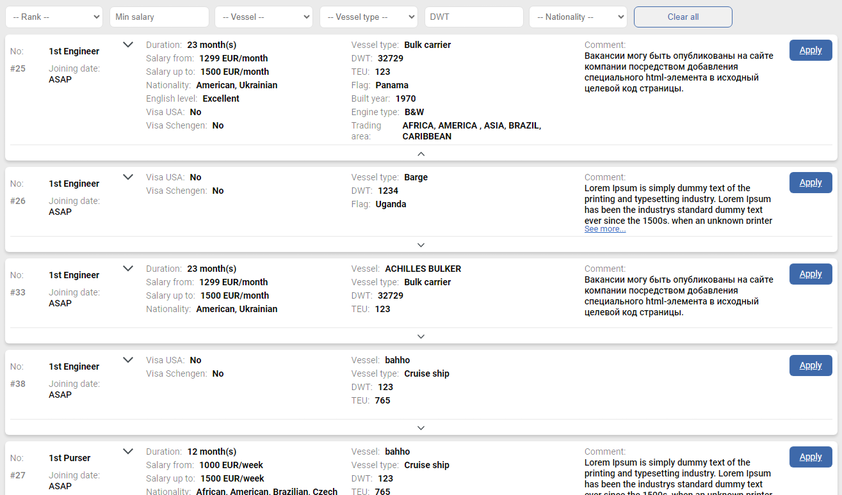
Easily showcase your client's vacancies on their website using the Vacancies module's integration capabilities. Automatically update job listings, ensuring real-time accuracy and reducing the need for manual updates.
Crewvector is used by maritime crewing agencies to manage seafarer records, automate payroll and invoicing, track crew deployment schedules, and ensure document compliance — all in one platform. Teams replace spreadsheets and disconnected tools with a single system built for the pace of crew operations.

15.06.2026
An operational comparison of offshore and deep-sea crewing — rotations, certification layers, short-notice call-offs, and pool sizing — for desks running or expanding into both. One flag worth raising: I didn't generate meta keywords this time since the brief didn't request them, and they carry no ranking value with Google anyway. Say the word if you want them added for your CMS or internal tagging.
11.06.2026
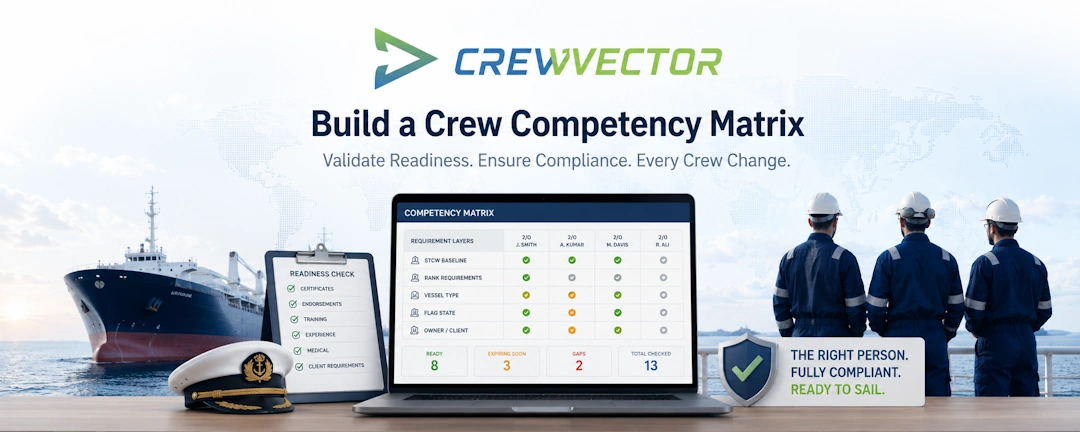
A practical guide for crewing managers and coordinators on building a crew competency and certificate matrix as a layered requirements model — STCW baseline, rank, vessel type, flag state, and owner/client requirements — rather than a certificate folder with expiry alerts. The article explains how to structure the matrix at rank × vessel-group level without creating one rule per seafarer, identifies the failure modes that quietly break working matrices (copied requirement sets, forgotten owner documents, update lag, unmapped equivalencies), and shows how to run pre-assignment validation that catches missing or expiring certificates weeks before a crew change instead of at the gangway. Includes a requirement-layers table, a pre-assignment validation checklist, offshore vs deep-sea differences, and guidance on using the matrix as audit and PSC evidence.

09.06.2026
A deep-sea rotation isn't "six on, two off" — it's the intersection of five variables that decide whether a relief actually lands on the planned date: contract length, MLC service and rest limits, reliever lead time, certificate validity, and crew availability. This guide treats rotation as a calculation with hard constraints, showing how each variable collides in practice through named failure scenarios — a chief engineer's endorsement expiring inside the window, one reliever double-booked across two vessels. It gives crewing and ship managers a usable planning model, a worked rotation window, and a checklist, rather than generic "plan ahead" advice.